


Editorials
Finale Comparison: Did Breaking Bad Really Have a ‘Stronger’ Finale Than Lost?

Breaking Bad was one of the most critically acclaimed shows to ever air, and Lost was one of the most influential. Both shows’ finales received similar attention before they premiered but drew wildly different types of attention post-airing. Lost did not fare quite as well as Breaking Bad did.
After Breaking Bad ended in 2013, the internet was flooded with tweets about it. Many of these tweets were aimed directly at Damon Lindelof and Lost:
“Screw you @DamonLindelof for not giving us such a perfect ending for Lost like Vince Gilligan did for @BreakingBad_AMC!”
Here is the link to more examples and an article written about them: https://ew.com/article/2013/09/30/breaking-bad-lost-finale/
And here is Damon Lindelof’s take, co-writer of Lost:
https://www.hollywoodreporter.com/news/damon-lindelof-breaking-bad-finale-639484
I know it’s a small vocal minority, like most negative air on the internet, but in this case I don’t think they inaccurately portray a consensus that Breaking Bad outdid Lost with its ending.
Because Breaking Bad’s ending, unlike Lost’s, was satisfying.
And that’s what we want, right? After investing dozens of hours into a show we want to be satisfied!
But a satisfying ending doesn’t necessarily mean it’s a good one. It is always immensely satisfying to watch Rocky beat the Cold War out of Ivan Drago while simultaneously avenging his friend, but that doesn’t make it a good ending. Lost’s finale, “The End,” makes some mistakes and may not be as satisfying as Breaking Bad’s finale, “Felina,” but it stays truer to its show, resulting in a more appropriate finish to its series.
I’m going to break this comparison up into three parts of what I believe makes a good finale. These are not the only aspects of a series ender that impact its effectiveness, but they are some of the most important: Characters, Themes, and Reflection
I want to make clear right now that I believe Breaking Bad is a stronger series overall than Lost. I am strictly comparing the finales and how well each ending wraps up its respective show.
Spoilers for the entirety of both series ahead
CHARACTERS
Lost was adamant that it was always about its characters and not the mysteries. It was stated repeatedly by the writers that the mysteries that would be solved would be the mysteries that mattered to the characters. While characters are absolutely integral to any story, it is not true that Lost was not also about its mysteries. The mysteries were a major draw to the series and it is understandable that many viewers were left underwhelmed with some of the answers (the whispers, for example), but the history of the show proves that the mysteries were always secondary to the characters. It wasn’t that a man could suddenly walk again; it was that John Locke could walk again. Few of us had posters of the Island or the Statue of Taweret hanging on our walls; fans had pictures of Sawyer, Kate, and the large cast photos, because what made those mysteries so compelling was the characters behind them. Most of the following shows that attempted to be Lost failed because they put mysteries at the forefront. Lost and “The End” kept the focus on the characters.

Lost/ABC Photo by Mario Perez
In fact, one of my biggest complaints about the Lost finale is the lack of recognition the Island itself actually gets. Would it have been too much to ask for Sawyer to look back at the Island on his way to the plane and give us one last full wide shot of the location we spent six years in? Or a solid look at it when he looks out the window as they are flying away?
And yet, I’d much rather the Island get shafted than Sawyer himself. Instead, the focus is on Sawyer getting to that plane and finally leaving the Island. It’s on Kate saving Jack’s life at the last second. On Jack accepting his place in all the madness. And each action they take reflects who they have been and who they have become throughout the series. Jack, obsessed with fixing everything, is no longer a man of science and fixes the Island on faith. Kate, always running, retreats from the Island but refuses to run from the complications of her relationship with Claire and Aaron. Frank, who just wants to fly planes that don’t crash, flies his plane away.
Richard decides to live. Hurley decides to rule. Ben willingly accepts a place as a VP and stays behind to meddle out his sins. The Man in Black dies fighting to escape his prison. The survivors find each other in the afterlife because they found a way to live together on the Island, so now they don’t have to die alone.
Each character gets attention in “The End,” and despite having such a large breadth of characters to juggle, they all get an active role in the finale.

Breaking Bad/AMC Photo by Ursula Coyote
“Felina” doesn’t balance its much smaller cast nearly as well. The focus is heavily on Walt, as one would expect the focus to be, but what about the rest of the cast? Nearly every other character in the episode stays still and waits for Walt to do something to them, including Jesse.
Jesse has such a minimal, passive role in the finale that, frankly, he could have been killed off in “Ozymandias” and the ending, plot-wise, would have been exactly the same.
Walt was the clear protagonist of Breaking Bad, but Jesse was the heart. We felt for Jesse, rooted for Jesse, and cried for Jesse. It’s a much bigger mystery to me why Jesse wasn’t more prominent in “Felina” than why there was a magic cork plugging up magic on a magic island. It may have been satisfying to watch Jesse drive away screaming, free from the hell Mr. White dragged him into, but he had zero agency and didn’t relate to the final plotline at all.
I found it more satisfying watching Jesse team up with Hank to bring Walt to his knees a few episodes prior. Jesse took an active role by making a decision to turn on Walt. It felt as though he was growing and learning as a person, finally taking action against Walt and pushing his character to a new place. If Jesse could have freed himself from Walt’s world through his own actions, instead of Walt deciding, “Now you can go,” it would have fit better with Jesse’s arc over the course of the series and brought his character to an even more thrilling conclusion.
Is it in character for Jesse to be excited to escape? Obviously. Were the circumstances of his release as powerful as they could have been? No.
“The End” took its protagonist, as well as all the other main characters, and allowed them each to make decisions based on all they had learned to accomplish or fail their goals. Each major character had an active role in the final outcome of the story. “Felina” pushed its protagonist to the forefront and made the beating heart of the show a side player.
THEMES
Lost and Breaking Bad were both shows with themes and ideas they explored. Each was consistent in the exploration of their themes, maintaining thematic consistency all the way through their respective series. From the beginning of Lost, even before it was outright stated, we saw that these people were going to need to work together, to live together, or die alone. Breaking Bad explored the idea of chain reactions and consequences from its first episode forward.
One of the most important aspects a finale has to nail is a reinforcement of the themes of the show. This is what this show is about, and it’s time to make a final statement, or, at least, raise a final relevant question to the themes that have been prominent throughout the show.
Most often these themes will be displayed or questioned through the characters and their actions. All of the actions by the characters in “The End” aren’t just true to the characters themselves but to the themes of redemption, loss, and faith running throughout the entire series. They reinforce an ethos – “Live together, die alone.”
Say what you will about the flash-sideways afterlife concept (I didn’t like it), but it is a true reflection of the idea that because the survivors learned to live together they didn’t die alone. It may be a bit too spiritual for some and lack the weight of the on-island story, but it provides an adequate vehicle to reinforce the idea that the survivors needed each other and that they became a family. They helped each other grow and move on in life, and therefore they move on together in the afterlife.

Lost/ABC Photo by Mario Perez
The finale also circles back to other prescient themes, such as Man of Science VS Man of Faith. Jack puts his faith in the Island, Jacob, and John Locke. No, we never learn for certain what would have happened if the Man in Black left the Island, but neither does Jack. If we did know, then Jack wouldn’t be acting on faith. In the flash-sideways, Jack gets his memories back from his father – appropriate considering how heavily fathers figured into the series.
“Felina” gives Walt the perfect conclusion to his saga. It’s riveting to watch him enact revenge on everyone who screwed him over, and even more satisfying to watch him admit to Skylar that he did it all for himself.
But this particular brand of satisfaction comes at a cost. His actions did not reinforce the themes the series presented us with. Was taking revenge in character for Walt? Absolutely. He was always a petty, egotistical man. But allowing this type of revenge goes against the ethos of Breaking Bad as a series. Breaking Bad never allowed for easy decisions and always forced major consequences against its characters with each decision they made. There was always a follow through, a reckoning. “Ozymandias” is a perfect example of everything the show was about coming together – the consequences to one man’s actions for illicit power created a chain reaction that finally caught up with him, destroying everything in his life. Being a badass drug dealer has its price. It isn’t glorious and it isn’t fist-pumping awesome.
If the show would have ended right there, that would have been a stronger conclusion to the saga because what follows goes against all this. “Felina” gives Walt the happiest ending he could have. He gets to “redeem” himself, in a sense, by getting the money to his son, explaining himself to his wife, and saving Jesse. Then, due to his death, he doesn’t need to live with or experience any of the consequences of these actions.
Perhaps some would argue that Walt himself is the reckoning and that all these people are getting what is coming to them based on their actions. But giving Walt this level of control and power goes against the themes of power from the previous five seasons. It also allows him to go out with pride, something that by all intents of the rest of the series was his downfall.

Breaking Bad/AMC Photo by Ursula Coyote
Even if we overlook the circumstances above, Walt’s means of revenge goes against the themes of the show as well. Breaking Bad’s pilot has a scene where Walt teaches his class about chemistry. He says that everything has a reaction, providing the first basis of chemistry themes in the series. Through the journey, we witness Walt use his chemical knowledge to outsmart drug dealers, create poisons, and (obviously) cook meth. And yet in “Felina” Walt takes down Jack’s drug crew through an impressive feat of mechanical engineering. Why not have him enact revenge on the group with an impressive feat of chemical engineering? This would reinforce the idea that all actions have a reaction, and give us a final look at one of the major themes presented in the show.
“The End” reinforces the major themes of Lost through the actions of its characters and the environment they find themselves in (even if that environment is a bit weak). “Felina” trades its thematic relevance for a revenge plot that, while satisfying, does little to further the themes of the series.
REFLECTION
Reflection is important at the end of any story. It is always of benefit to remind viewers just how far the characters have come and remind them of how much has changed and how much has remained the same. This gives an ending a feeling of completeness and allows viewers an opportunity to say “good-bye.”
“The End” has several callbacks and lines to earlier moments in the series. The shot of Jack and Locke looking down the hatch is recreated. Famous lines such as “I’ll see ya in another life, brother” are spoken (and also another great relation to the thematic resonance of “live together die alone”).
The most obvious callbacks are the “reawakening” memories of so many of the characters. While they advance the story in regards to the survivors “waking up” in the sideways universe, I don’t feel they are quite as effective as the rest of the homages paid to the series in real time. They have a scent of clip reel, which is a cheap way to drum up nostalgia. I find it much more effective when Jack dies in the same place he woke up on the Island.

Lost/ABC
“The End” also misses an opportunity to allow us to reflect on the Island itself. We don’t have a chance to take in the full scope of the Island one last time, and it doesn’t use its environment as well as it could to reflect.
“Felina,” on the other hand, excels at these callbacks, even if I don’t feel the plot itself is up to the task. Skinny Pete and Badger have a fantastic cameo in the finale, allowing us one last look at the goofy duo. We finally get to see where the ricin ends up, which ties up a seasons long thread. Walt gets to say his goodbyes, allowing the audience to say goodbye with him.

Breaking Bad/AMC Photo by Ursula Coyote
A flashback memory plays within the episode in a similar fashion to how “The End” uses memories. Again, it feels a bit cheap, but Walt standing in his abandoned, vandalized home is an amazing visual representation of how far he has fallen.
I don’t feel there is any more effective callback than Walt’s emotional look at the meth lab. All that we need to understand about his view of himself is written on his face, and we get a long look at the environment Walt’s journey took place in. As I stated earlier, “The End” doesn’t afford us a chance to say goodbye to the Island properly, but “Felina” nails this aspect.
And then Walt dies, and the series uses its last shot to pay homage to another finale.

Left: Lost/ABC
Right: Breaking Bad/AMC
Neither finale is perfect. Your mileage will vary based on what is most important to you, and there are more aspects that go into an effective finale than the three that I highlighted above.
“Felina” is a fine finale. Damon Lindelof thought it was great. I think it is fair to say most viewers found it satisfying. “Felina” learned from “The End,” understood that viewers felt mislead, cheated, and like there were too many loose ends floating around, and adapted. Breaking Bad left no stone unturned and finally gave in to the power fantasy it had been avoiding before, leaving many viewers with a feeling of triumph that Walt proved you don’t mess with Heisenberg.
That wasn’t what Breaking Bad was about, though. It wasn’t a tale about learning not to mess with Heisenberg, and that’s why I don’t feel its finale truly lives up to what preceded it. One of its lead characters is rendered ineffective and the themes of the show don’t shine very brightly (if at all). There are some great callbacks and scenes of reflection providing us a good opportunity to say goodbye, but ideally that would be within a plot that reinforces those first two areas (character and themes). I don’t believe that “Felina” does this.
As a single piece of media and as a singular episode, I would probably agree that “Felina” is a stronger piece of work. It’s exciting, clean, and effective in its simplicity. But as the end to a series it doesn’t reflect the show it represents.
“The End” on the other hand, pushes its characters and themes to the forefront. “Felina” may be more satisfying than mystifying, but “The End” effectively wraps up its story in a way that is true to the characters and themes of the series. On that level, satisfaction be damned, it makes for a better cap to its respective show, wrapping itself in everything that made Lost Lost, which is why I believe “The End” > “Felina.”

Lost/ABC
Even though the flash-sideways was kinda lame.


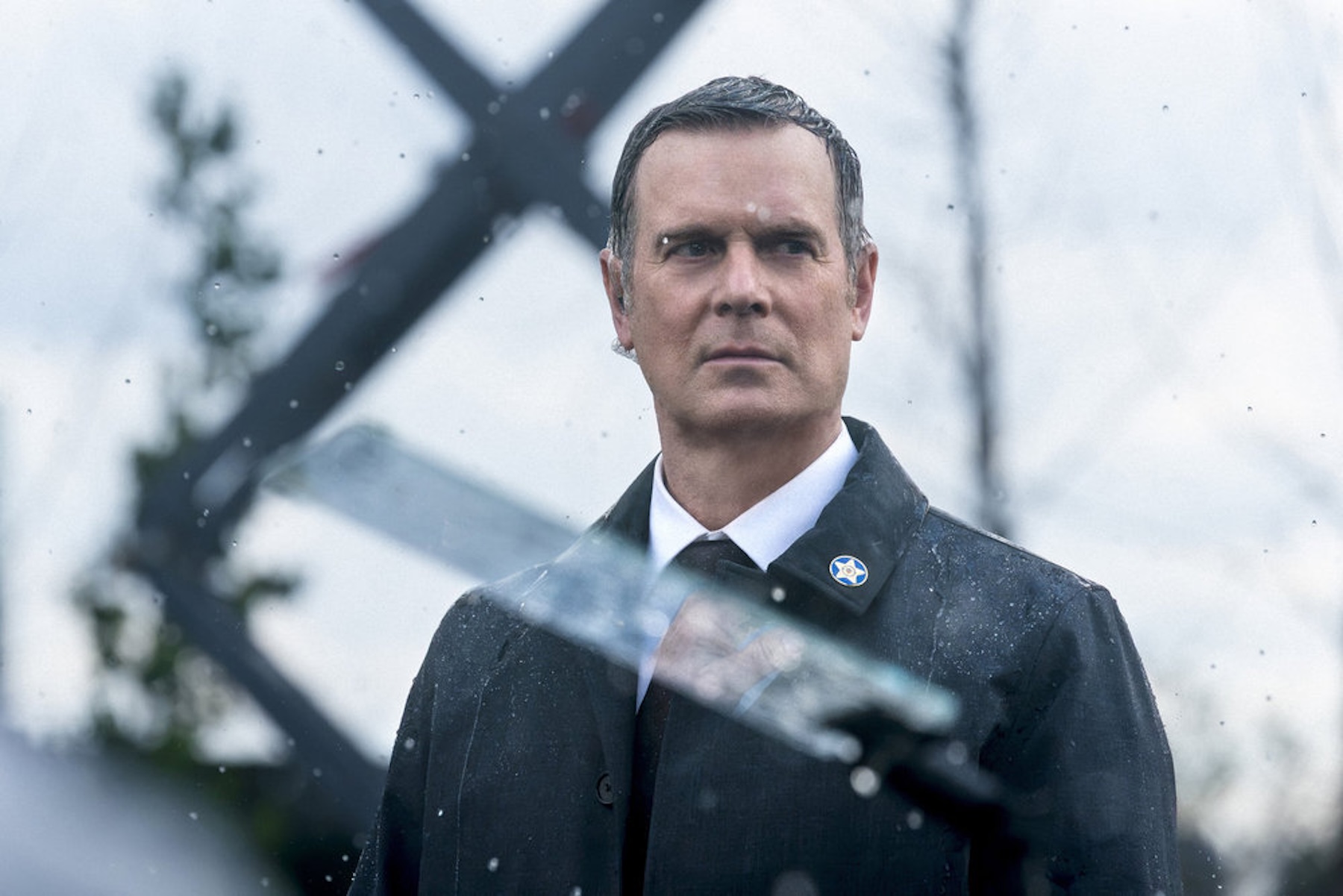
Line of Fire is one of NBC’s best new dramas, following the Hollingsworth family, whose members all work in various branches of federal law enforcement.
Monday nights have become jam-packed with twists and turns as audiences tune in to solve cases and learn more about the mystery surrounding their son, Jack.
However, there won’t be a new episode airing tonight on Nov. 2, 2026.
NBC’s Line of Fire is taking a one-week break on Monday, November 2, 2026, but the network hasn’t publicly confirmed why; instead, two comedies, St. Denis Medical and The Rise and Fall of Reggie Dinkins, will air that evening.
When Will Line of Fire Season 1 Episode 7 Air?
Line of Fire Season 1 Episode 7, titled “Guest List,” is set to air on Nov. 9, 2026.
The current episode schedule is:
November 2: No new episode scheduled
November 9: Season 1, Episode 7 — “Guest List,” airing at 10 p.m. ET / 9 p.m. CT
The synopsis teases, “Set at the Zenith Ball, Mike attempts to prove his theory regarding an assassination attempt on President Lawrence, while Clare and Nia team up to stop a terrorist group.”
The freshman series, which premiered on September 21, has officially received a full-season order, bringing its first season to a total of 18 episodes.
Initially picked up for 13 episodes, the Peter Krause-led drama has earned five additional installments following an impressive ratings performance, giving viewers even more time with the Hollingsworth family.
The pickup, announced on October 22 per Deadline, comes just over a month after the show’s debut, making Line of Fire one of the early success stories of the 2026–27 television season.
And the numbers help explain why NBC is investing in the series.
According to the network, the show’s premiere has averaged more than 14 million viewers across platforms, while its second episode saw a 47% increase in the key adults 18–49 demographic compared to its debut. The drama has also performed strongly in delayed viewing and on Peacock, where episodes are available to stream the day after their NBC broadcast.
Krause stars as Secret Service agent Mike Hollingsworth, alongside Hope Davis as U.S. Marshal Jane Hollingsworth. The ensemble also includes Kat Cunning, Taylor Bloom, Tommy O’Brien and Charlie Barnett.
While the full-season pickup is an encouraging sign from the network, NBC has not officially renewed Line of Fire for Season 2 yet.
Let us know – have you been enjoying the series thus far?

Line of Fire has yet to deliver a bad episode, though there’s definitely so much going on that you need to be laser-focused, or you’ll miss something critical.
That was especially true on Line of Fire Season 1 Episode 6, titled “Cabin Pressure,” which saw Jane having a worse day at the “office” than her ex-husband Mike, which isn’t to say he wasn’t having a bad day either.
But Nia was definitely having the worst day of all. She was hot on the trail of Jack, a.k.a. David Waldon—or so she thought. In reality, Jack had deliberately left a trail of breadcrumbs, knowing she wouldn’t be able to resist following them. It was all part of his plan to lure her out, and after delivering a blow to the head, he let her go with a pounding headache and a stern warning: She wasn’t to breathe a word about him to anyone, especially his family, who were not to be informed that he’s still alive.
Okay, so there’s a lot to unpack there.
Why can’t the Hollingsworths know he’s alive? Why is he so bad at hiding? Or why did he want to be found?
What is he really after? Who is he working for? Is he protecting his family or hurting them?
Nia seemingly fell right into his trap, which either makes her a terrible detective or proves just how cunning he really is. I can’t really tell.
Either way, I have a feeling she’s not the type to stay quiet simply because someone tried to spook her; she’s committed to justice, so she won’t stop until she figures out what it is that David is truly after and why.
I thought there may have been a connection between his kills and the assassination of former President Barnes, but for now, nothing seems to be connecting the cases.
For something that Mike couldn’t shake for 6 years, it was swiftly wrapped up. Mike informed Barnes that his good friend Antasca was the one who pulled the trigger that day, which was odd, especially because he was a huge campaign donor. Furthermore, as Mike pointed out, Antasca wouldn’t have missed such a shot unless he wanted to.
From there, they pieced together that the shooting was staged to help Barnes win the re-election. And suddenly, Antasca ended up dead from a gunshot wound to the head just as they were closing in on him. Suspicious? Extremely. But for some reason, Micah was annoyed his father couldn’t let it go, even after getting the guy. Are we sure this man should be trusted with protecting the president’s daughter? Because how did he not see this reeking of a conspiracy coming from within?
How convenient that the only man who could literally explain what happened somehow ended up dead.
Of course, Mike’s gut was right—Antasca didn’t kill himself; it was murder, and he only realized that the call was coming from inside the house when he was talking to his detail, Daryl, about it. When it became obvious that Daryl was made, he came clean about everything, explaining that without the attempt on his life, Barnes would’ve never won again; therefore, everything he did was for the greater good.

LINE OF FIRE — “Cabin Pressure” Episode 106 — Pictured: (l-r) Keith Nobbs as Daryl, Tommy O’Brien as Mike Jr. “Micah” Hollingsworth, Peter Krause as Mike Hollingsworth — (Photo by: Ralph Bavaro/NBC)
And he put Mike at a crossroads—turn him over and burn his and Barnes’ legacy, revealing it was all based on a lie, or stay quiet.
Much like with Nia, I don’t think Mike’s morals would ever just allow him to look the other way, even if it meant destroying his own reputation. He clearly didn’t care if he looked crazy while spewing conspiracy theories.
And unlike Nia, who went in without any backup, a classic rookie mistake, I don’t think Mike would ever do that. I think he went in knowing it was Daryl, was wired up, and already exposed the whole conversation.
The episode became even more convoluted when Jane’s plane was hijacked by a grieving father, who was a former air Marshall posing as a real one, hoping to get revenge on the airline for dismissing a critical error with their planes as an “accident,” which ended up killing his daughter.
The mystery wasn’t just unfolding for audiences at home; it also took plenty of people on the ground to piece together what was happening, especially once it became clear that six planes had been hijacked as part of a larger scheme to send a message that couldn’t be ignored. But Jane’s plane was the only one to lose all communications and instrument readings, leaving those on board essentially flying blind. With no way to restore contact, their options were grim: run out of fuel or attempt a landing that could end in disaster.
Jane relied on her detainee, Elliot, a hacker she was transporting, who turned out to be in cahoots with the air marshal, though he didn’t realize the extent of his plans, and ultimately helped her reverse the damage.
And to convince Air Marshal Norris to surrender, Jane had to connect with him through the pain of losing his daughter and his desperate desire to make his message heard. Time was running out, and lives were on the line, including hers, which meant she had to allow herself to be vulnerable, opening up about losing Jack and the toll it had taken on her marriage and her relationship with her kids.
It was a huge moment for Jane, who mostly put walls up in front of her children, as they got to see her in a different light
And the ordeal also brought her closer to Mike, her ex-husband, whom she’d been pushing away. But faced with what could have been her final moments, Jane realized he was the person she wanted by her side. Maybe there’s hope for them after all.
They may all be agents comfortable with this line of work, but on a human level, this was their mother, after all.
Everyone in the Hollingsworth family is working toward healing in one way or another, but all that progress could soon come crashing down when the truth about Jack comes to light, threatening to turn their world upside down and shatter everything they’ve known, trusted and believed.
On top of all of that, there also seems to be a storyline bubbling involving Russ and his former partner, Brandon, who reconnected for a mission and ended up planning a double date. Did anyone else pick up on Russ’ longing looks and his disappointment that Brandon wants to invite their respective girlfriends for the hang? And Claire is definitely setting the scene for a romantic relationship with Raul, which I don’t hate, since he willingly brought her in to work the hijacking case.
There’s a lot of moving parts on Line of Fire, which keeps audiences engaged, but it’s also overkill at times, forcing me to hit rewind multiple times simply to catch what I may have missed. It’s so easy to miss things.
And we haven’t even gotten into the whole romance with Micah and the President’s daughter, nor have there been any significant scenes with the President, which is odd since half of them work the Secret Service detail.
I’m wondering if the Jack mystery will continue to be a standalone, or will it at some point merge with all the other ones to reveal that everything is connected?
What did you think of the episode? Are you happy Nia got a face-to-face with Jack? Will Mike do the right thing when it comes to Daryl—or will the American people not benefit from learning the truth?

I didn’t have high expectations going into A Knight to Remember, and honestly, a big part of that came down to the promotional poster. It didn’t capture the charm you expect from a Hallmark movie, and it certainly didn’t do Julie Gonzalo and James Trevena any favors with those blank stares.

A statue of an English knight arrives in Chicago for an art exhibit. While cleaning the statue, museum conservator Emily impulsively kisses the statue, bringing him to life. Photo: James Trevena, Julie Gonzalo Credit: ©2026 Hallmark Media/Photographer: Allister Foster
Still, I gave it a shot. It’s set in my hometown, Chicago, so I felt like I had to support it; plus, I’m a sucker for a predictable, cheesy love story. Much to my surprise, I ended up genuinely enjoying it and liking it way more than I thought I would. It’s easy to be critical of these movies because, yes, they’re into all the Hallmark staples—with plenty of pumpkin spice latte references to emphasize that this is a fall film—but there’s also real heart and some solid comedic moments.
I wasn’t fully convinced by the premise of a medieval knight who’s turned to stone and accidentally comes back to life to find true love. But as I started my watch, my mind raced to remember where I saw a knight-turned-real-boy storyline before, eventually landing on one of the more enjoyable Christmas films of years prior— Vanessa Hudgens The Knight Before Christmas. Turns out, there is something captivating and heartwarming about time-traveling knights (with great manners and a big flirting game) finding their place in the modern world.
As for the plot, there was plenty to work with, starting in 1428, when marrying for love wasn’t the norm; Sir Griffin already knew he didn’t want the life laid out for him. Maybe he was more of a modern man than he ever even knew.
In fact, he’d rather be turned to stone than marry Princess Beatrice, which, frankly, says a lot. I do wish we got more of his past, or even a glimpse of Beatrice, but alas, the story fully focused on Griffin’s present-day adventures, navigating a world that was so deeply unfamiliar to his time.
As Griffin’s wish was granted centuries later, he woke up after Emily planted a kiss on his stone lips. And yes, I did spend a few minutes wondering why she committed to fully kissing a stone figure with such passion, but I guess we’re just rolling with it. Love (or loneliness) makes you do crazy things!
As the stone pieces keeping him trapped break away, Griffin is freed. And he’s been preserved in all his glory, apparently, without any bad breath! (I know, these are the things you just accept when diving into these rom-coms, but I couldn’t shake it.)
He navigates this big, new world with wide-eyed wonder.
The biggest thing to throw him off? Cars… or rather, rideshares.
From here on out, I will be referring to my shower as “indoor rain” because that’s much more logical. Thanks, Griffin.
Memory foam beds (“sleeping on clouds”) and bagels—all become part of his journey, as does a pumpkin spice latte, and it’s charming to see him enjoy one for the first time ever.
Meanwhile, Emily is dealing—very casually, I might add—with the whole “a statue went missing” fiasco at the museum.
“What, did it just get legs and walk away?” my mother would ask… And, well…
Personally, I would not be that calm, but she clearly doesn’t have the same debilitating anxiety that I do anytime my boss pings me asking if I have a minute to chat.
And she’s far more focused on helping Griffin complete his quest before he turns back to stone again, a fate he’d, understandably, like to avoid if at all possible.
Part of that mission involves Emily convincing herself and everyone around her that she’s not into him, despite being totally into him.
And there’s the aptly-timed Medieval Fayre hosted by her good friend Marcus, who was totally crushing on her work BFF, Ivy. Griffin picked up on it in mere seconds, but sadly, we never got to see anything pan out between them, which is a missed opportunity. There was no payoff to all those moments teasing the connection between Ivy and Marcus. Couldn’t we get a little kiss on the cheek during one of the fair moments?
There’s also Emily’s ex, Tom, who complicates everything.
He’s leading the investigation into the missing statue, clearly motivated by career ambition (which tells us all we need to know about what kind of husband he was), along with a smidge of little jealousy that Emily has a hunky new dude around.

A statue of an English knight arrives in Chicago for an art exhibit. While cleaning the statue, museum conservator Emily impulsively kisses the statue, bringing him to life. Photo: James Trevena, Julie Gonzalo Credit: ©2026 Hallmark Media/Photographer: Luka Cyprian
To be fair, his suspicion that Griffin could be a con artist isn’t entirely unreasonable given the armour with the residue matching the one found at the museum. But it’s the way he undermines Emily in the process, suggesting she’s so gullible, that makes it so extremely easy to root against him. When he tries to rekindle their relationship, playing the “I miss you” and “you were the best thing to happen to me” card, she shuts it down quickly—and rightfully so.
In the end, Tom gets what’s coming to him when his conflict of interest is exposed, as well as the fact that he broke into an apartment to obtain evidence.
He really thought he did something…
It’s a satisfying moment, just as it was to see Emily tell Tom the entire truth about Griffin, only for him to dismiss it as a joke. I wouldn’t have minded seeing Tom fully realize just how wrong he was about Griffin, and that he just lost the love of his life to a piece of stone!
The core of the story revolves around Griffin’s fate, as Emily has just three days to fall in love with him or he’ll turn to stone forever.
The catch is that her feelings have to be real, as Griffin refuses to tell Emily what’s at stake so that she doesn’t feel manipulated or forced into loving him.
No pressure or anything!
The deadline looms, but Emily continues to struggle to admit how she feels, her past with Tom clearly leaving its mark.
Even as Griffin’s fingers begin to turn gray, Emily can’t get the words out, which is frustrating.
Of course, this is Hallmark, so things work out. Emily realizes her life has been split into “before Griffin” and “after Griffin,” and she can’t imagine a life without him. The clarity helps her finally embrace her feelings, and it’s sealed with a kiss.
Griffin stays in the modern world to permanently enjoy the perks of indoor plumbing, and the two move forward together, bringing their story to life as part of the museum’s exhibit, which is such a hit that they’re embarking on a world tour.
It’s a happy ending, as expected—even if Emily had us in the first half.
As for the standout quote from the film, the award goes to Griffin, as he reflects on the world that no longer exists: “I do not ache for lost love, I ache for lost life.”
Slightly cheesy? Sure! But also surprisingly meaningful.
Did you enjoy A Knight to Remember as much as I did? What stood out most to you? Share your thoughts!


 Editorials2 weeks ago
Why Isn’t ‘Line of Fire’ on Tonight (November 2, 2026)? Here’s When It Returns

 Tracker1 week ago
Why Isn’t a New Episode of ‘Tracker’ on Tonight (November 8, 2026)? Here’s When It Returns

 Mistletoe Murders2 weeks ago
Mistletoe Murders Season 3 Premiere Review – The Grim Wreather Strikes Again

 Tracker2 weeks ago
Tracker ‘Need to Know’ Brings Back Russell Shaw in All His GOAT Glory

 Mistletoe Murders6 days ago
Mistletoe Murders Season 3 Episode 2 Review – Emily’s Former Life Comes Into Focus and Changes Everything

 High Potential2 weeks ago
‘High Potential’ Finally Announces the Much-Anticipated Season 3 Premiere Date—Here’s When It Returns With New Episodes

 Tracker3 days ago
‘Tracker’ Season 4 Episode 6 Review: Reenie Turns to Colter for Help With a Case Close to Home

 Line of Fire1 week ago
Line of Fire Season 1 Episode 7 Review – Guest List